
Abdullah Alabdulhadi @simple_abod
Dear Mark Walter and the Guggenheim Partners family,
I write to you today not just with a message, but with a story. It is a story I feel compelled to share—one born from a lifetime of passion, hope, and dedication to a single dream. I know this letter is a lengthy one, but I am confident you will find the perspective of a devoted fan, whose life has been intertwined with this club, to be worthwhile.
While you are the primary addressee, this story also speaks to the Pozzo family who authored the club’s greatest chapters, to my fellow Udinese fans who are its heart, and to all who believe in the romance of sport.
My goal is simple yet deep: to offer advice to those who are about to live the dream I have held since I was a boy—the ownership of Udinese. To do this, I must first share the story of that dream. This is not an accusation, but an invitation into the world of this club, to understand its profound meaning—a meaning I hope we will soon share as part of the great Udinese family.
To truly convey this, my letter unfolds in four parts, like chapters in a story:
Part One: “Begin at the beginning” – My unlikely journey as a young boy in Saudi Arabia who fell in love with Udinese and the Pozzo family’s vision.
Part Two: “See the forest for the trees” – A look at the brilliant Udinese & Pozzo business model that made the club a globally respected talent factory.
Part Three: “Seek first to understand” – A journey into the heart of the club: its fans, its soul, and why we love football so passionately.
Part Four: “Look at it from all angles” – Finally, we will arrive at my humble advice for the new era, a vision for the future built on all that came before.

My story with Udinese begins in an unlikely place: the room of a 13-year-old boy in Saudi Arabia during the 2004-2005 season. At a time when my friends were choosing giants like Manchester United or Real Madrid, my path was different. It had to be.
In my childhood room, there was no satellite dish, so that I couldn’t access channels from around the world. My entire access to European football came from a weekly Serie A highlights show on the new Saudi sports channel at the time. With live matches out of reach, my stadium became my television screen, and my universe was a video game: Winning Eleven.
I was obsessed with one mode in particular—the Master League, which lets you become both the coach and the president of a club. Having mastered the game with big teams like Inter or Madrid, I sought a greater challenge to avoid boredom as an alone boy. I began choosing mid-table teams or teams from the second division, finding joy in taking them to glory over a 2-3 season. As a rule, I would sell most of a team’s players to build a new squad that fits my style of play.
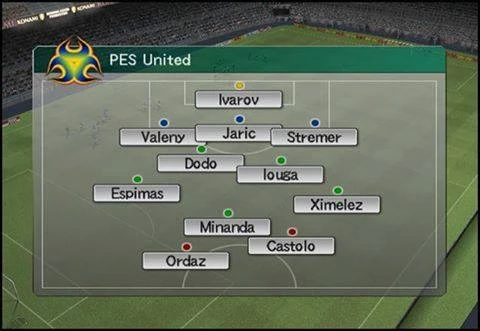
Then, one evening, everything changed. I was watching the weekly Serie A highlights when the focus turned to a team doing something special. They called Udinese the “black horse” of the league, a challenger for a Champions League spot, playing a thrilling, attacking style of football.
In that moment, I saw them in a completely new light. This wasn’t just another Italian team; this was a club doing in real life precisely what I loved to do on my PlayStation. It was as if my virtual strategy had come to life. The highlights had barely finished before my console was on. I started a new Master League with Udinese, but this time, I set a new rule for myself. To make it real, I promised not to sell or buy a single player for the first season. Could I achieve what their coach, Luciano Spalletti, was achieving with the very same squad?
It was, without a doubt, the most fun I ever had in Master League. I didn’t just play with them; I came to know them. That was my first introduction to the legendary Antonio Di Natale—then in his first season with the club—and I had no idea I was about to fall in love with him and the team forever. It was pure joy to command an attack of Iaquinta, Di Michele, and Di Natale; to control a midfield with Mauri, the brilliant Pizarro, and my personal favorite, a young Sulley Muntari ; and to rely on the flying wingback Jankulovski and the solid veteran defenders Bertotto and Sensini along with a great GK like De Sanctis.
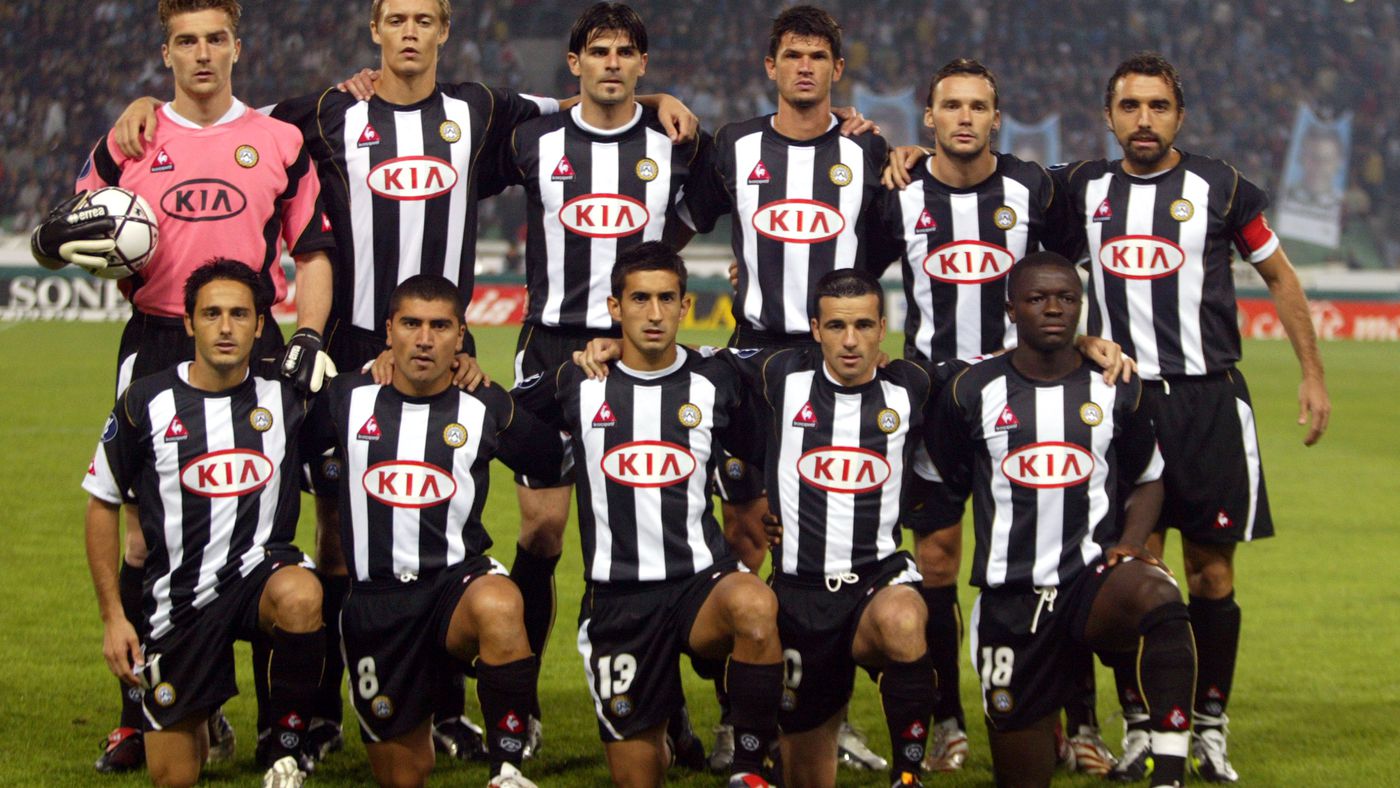
A new obsession was taking hold. The week-long wait for the next Serie A highlights began to feel like an eternity. My desire for more wasn’t just about being a fan; it was about enriching the world I had created.
You see, I wasn’t just the coach and president of Udinese on my PlayStation—I was also the match commentator. To make the games feel real, I would narrate the action out loud as I played. When facing a giant like Inter, I’d proclaim, “The black horses are playing without fear, hoping to snatch the three points!” or against Juventus, “The first black and white of Italy are showing their stripes against the famous Old Lady!”
The commentary was fun, but I craved more depth. I wanted to add real details, like mentioning it was Di Natale’s first season and what a brilliant surprise he was for Coach Spalletti, who knew his talent best. To do this, I turned to the internet, determined to find any news I could. My first challenge was simple but significant: I didn’t even know how to write “Udinese” in Arabic. After several tries, I finally spelled it correctly, and a new window opened. The news was mostly just score results or brief articles about their strong attack, but for me, it was gold. Every new fact became a new line of commentary, making my private universe more real with each passing day.

And so, a new phase of my journey began: the quest for knowledge. My hunger to learn every detail about Udinese was insatiable, but the biggest obstacle was language. At 13, my English was very weak, and I quickly discovered that the most detailed information was in English, not Arabic.
Undeterred, I developed a painstaking process. I would type “Udinese” into search engines, find an English article, and then run it through a translator. Often, the result was a mess of confusing, nonsensical sentences. But my determination was greater than the poor translation. When a full article didn’t make sense, I would meticulously copy and paste it one sentence at a time, piecing together the meaning like a detective solving a puzzle. It was slow and frustrating, but every new piece of information was a victory.
My solitary research at home stood in stark contrast to the lively football debates at school. These conversations were the social currency among my friends, dominated by talk of Saudi league teams or global giants like Manchester United, Juventus, and Real Madrid.
I soon found a passionate circle of Serie A fans. Unlike me, they had satellite subscriptions and watched the live matches every weekend. Their loyalties were pledged to the titans: Milan, Inter, Juve, with a few devoted to Roma. Then came the day they asked me which team I supported.
For the first time, I said it out loud: “I am an Udinese fan.”
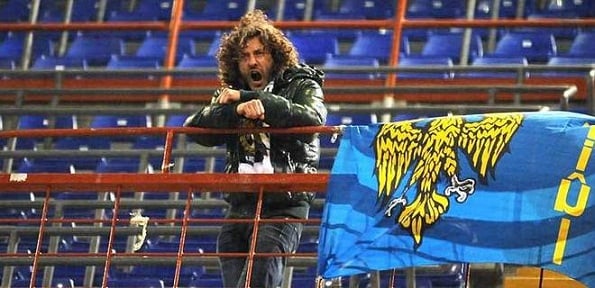
The words surprised even me. Why had I said it with such certainty? I had never seen a full, live match. My entire relationship with the club was built on weekly highlights, painstakingly translated articles, and my immersive world in Master League. A stunned silence fell over the group. You have to imagine their shock; to them, Udinese was just a name on the fixture list, a team their clubs played against twice a season. Their knowledge came from TV commentators, but mine was being built from the ground up. In that moment, by choosing the unexpected, I had defined myself to be just like Arrigo Brovedan, the lone supporter in the away stand, proudly and singularly defending my colours for the rest of my life.
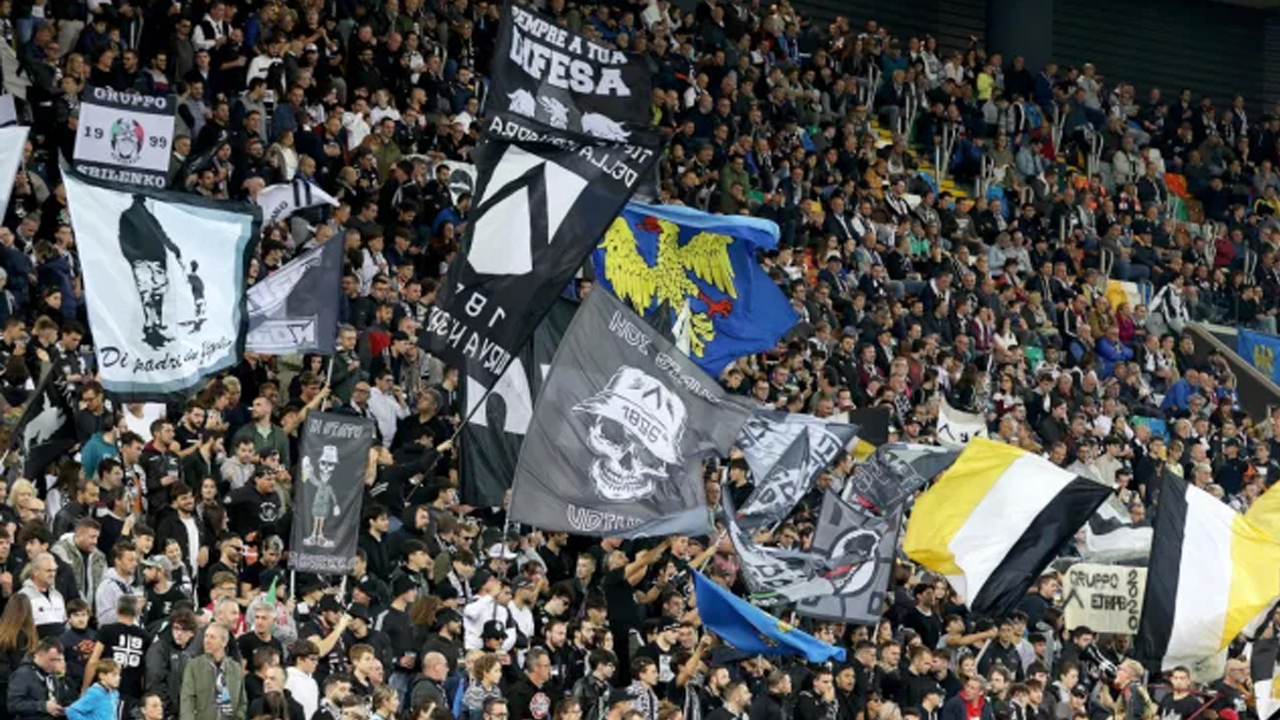
That moment of declaration solidified everything. The feeling of being a unique fan with my own distinct taste in football was powerful, and it led me to make three vows to myself, without truly understanding how they would shape the rest of my life.

My relentless searching eventually led to a breakthrough: a website called “udineseblog.” For a solitary fan like me, discovering it felt like unearthing a hidden world.
You can’t imagine my joy. Here was a place dedicated solely to Udinese, with news updated by the hour, interviews with former players, and deep-dive articles. It was a treasure trove of the information I so desperately craved. It was here that I truly began my education. I learned about the legendary Zico and the famous “either Zico or Austria” ultimatum from the fans—a story that showed their burning desire for success at any cost. More importantly, I finally understood who the real owners were: the Pozzo family and their unique business model.
That’s when it all clicked with a profound clarity. The Pozzos were playing Master League in real life, just like me. The strategy I had stumbled upon in a video game—scouting talent, developing it, and building a self-sustaining project—was the very definition of their model. For years, this became my simple explanation for how Udinese worked. I immediately fed this new layer of reality into my PlayStation commentary, making my role as Udinese’s owner and manager more profound than ever before.
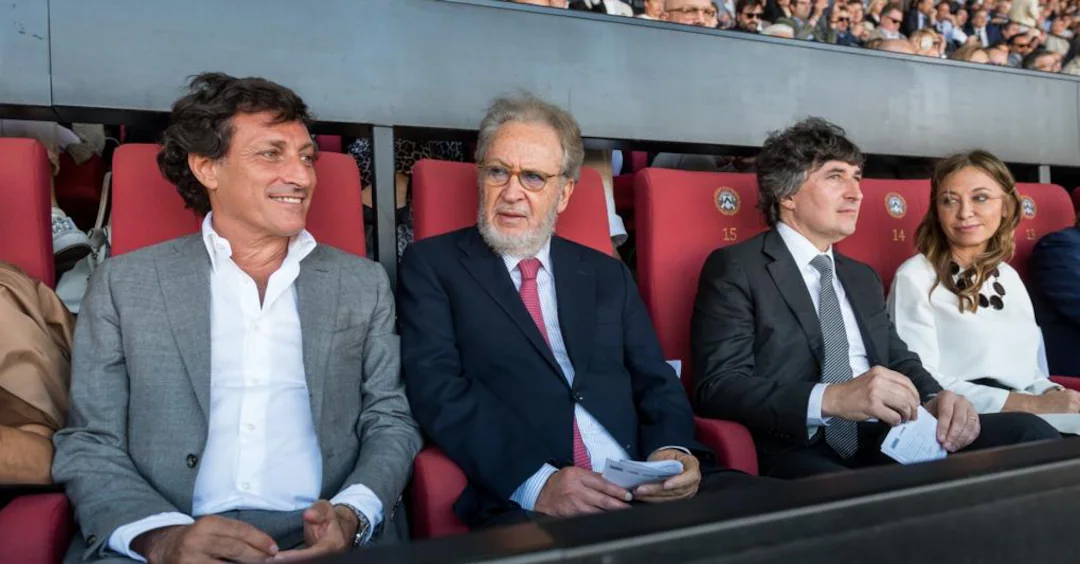
The Pozzo family’s influence went far beyond making my Master League sessions more fun; they fundamentally changed how I saw the entire sport. Before them, I believed the joy of football was simply about winning trophies. They taught me a deeper truth. They made me understand that true success in football lies in the beautiful struggle: it’s about winning against the odds and challenging rivals who have far greater resources, all while artfully building a stable business and a sustainable football project. The beauty wasn’t just in the victory, but in the vision behind it.

Inspired by the Pozzos, my Master League career transformed from a simple pastime into something more: a life’s purpose. My lonely hours playing a single game mode became the foundation for a business dream to one day replicate their model in real life, hopefully with them.
My addiction to the game deepened, but it also matured. I began creating detailed Excel spreadsheets to track my squad, logging everything from player names and heights to their ages, salaries, and market values. My goals became analytical: lower the average age and salary costs while increasing the squad’s overall market value. I was unknowingly teaching myself the basics of football management and data analysis.
To keep the simulation pure, I stayed true to my promise not to sell any of Udinese’s real players and limited myself to playing just one match per week, timed to coincide with the actual Serie A schedule. But my project was missing a crucial element: live matches. This fueled my campaign to convince my father to get a satellite subscription. Eventually, he conceded, agreeing to let me watch the games on his TV in his room a small but significant victory, even if he still didn’t know the name of the team that had captured his son’s heart.
I finally got my chance near the end of that season. My first-ever live match was Udinese vs. Siena. It was a worthy introduction—a dramatic 3-2 victory where the lead swung back and forth until we scored the final, winning goal. The feeling was electric. After that, I was able to watch two more wins: 2-1 against Atalanta and a satisfying 1-0 victory over Lazio.
However, I couldn’t watch the last three games of the season, all of which ended in 1-1 draws. To the silly young boy I was, the conclusion was inescapable: I felt responsible for the team not winning simply because I hadn’t been watching. It sounds absurd now, but the feeling was real and deeply frustrating. It made me more determined than ever to get my own satellite, which my father had promised would arrive before the next season.
The wait for the new season was long, so I poured my energy back into Master League, continuing my parallel career as Udinese’s manager to challenge the Pozzo family’s real-life strategy. That summer, something happened that I still can’t explain. I remember the exact day I reluctantly decided to sell Marek Jankulovski to Milan in my game—a difficult choice, but I needed the funds for younger players. Later that very day, I was watching the Saudi sports channel when a news ticker at the bottom of the screen announced the unthinkable: Jankulovski had been sold to Milan. I was shocked. It was a crazy coincidence that, for a moment, made me feel directly responsible for losing a player I loved.
Still shaken, I decided a week later to sell David Pizarro to Inter in my game to fund more virtual signings. As you might have guessed, the real Pizarro was also sold to Inter in that same transfer window, a second coincidence that stunned me even more.
And so, for the silly boy I was, and perhaps still am, a rule was forged in my mind: if I sold an important Udinese player in my Master League, they would be sold in real life to the very same team. But if I signed a player, no matter how great, that action would not affect reality.

The next season began, and as promised, I got my own satellite. But my victory was incomplete; I quickly learned that not all Udinese matches were broadcast, especially if they played against smaller teams or at the same time as a more high-profile match.
This spotty access fed my growing anxiety. The team’s performance that season was disappointing, and my superstitions provided a clear, if painful, explanation: I blamed myself for the losses in games I couldn’t watch, and I carried the guilt for the transfers of Pizarro and Jankulovski. In my mind, my small body and simple actions had the power to send messages into the universe with real-world consequences for the club I loved.
It sounds silly now, I know. But you might be shocked to learn that this fear has never truly left me. To this day, I am scared to play as Udinese in a video game and sell an important player. The potential for a disastrous coincidence is a risk I’m simply not willing to take. You can decide for yourself if this is a measure of my love for Udinese or a testament to how silly I remain.

My solitary journey took an unexpected turn when I stumbled upon an Arabic football forum. Among fan associations for all the big Italian clubs, I couldn’t believe my eyes: there was one for Udinese. It had only one member, its president, a fellow Saudi named Hussain. He was writing articles, covering games, and fighting alone against other fans. Reading his posts, I felt an incredible sense of relief—I was no longer alone.
I created an account (calling myself Udinese lover, which sounds much better in Arabic) and replied to one of his articles. He was shocked to find another Saudi Udinese fan and, after a private message where he “tested” my knowledge of the club and the Pozzos, he offered me my first honorary position: Vice President of the Arabic Udinese Association.
I was immensely proud. Hussain and I became a two-man team, dedicating ourselves to growing a fan base in a region where the club had none. We translated news, wrote articles on the club’s history and the Pozzo family business model, and tried to make as much noise as possible. This sometimes meant taking a more aggressive path, challenging fans of bigger clubs on their pages to get a reaction. It was often just the two of us against everyone else, but we felt a profound sense of duty to our team.
My guilt over the team’s poor results led me to make a promise to myself that I would never break: I would never miss a game for Udinese again, no matter what. I can say that from the 2005-2006 season until today, I have kept that promise—watching on any channel, link, or IPTV service, regardless of language or quality. That vow carried me through all the club’s ups and downs and into its most enjoyable years. I cherished the eras of coaches like Pasquale Marino and Francesco Guidolin, but above all, there was the legendary Antonio Di Natale, a player who always brought me happiness. I have countless stories from that golden era, but I will save them for another time to keep this message from turning into a book.
Those great Udinese years were more than just entertaining; they were a lifeline during one of the darkest periods of my life. I had left college, abandoning my dream of becoming an engineer, and my weeks were bleak and colorless. I was sad all the time, except for the two hours of an Udinese match. It truly felt as if the team knew I needed them, as if they stepped up just to give me a reason to smile. This was when Di Natale became, in my eyes, more than just the best player I have ever seen, his goals lighting up my entire week.
My connection to him was tested in the summer of 2010 when he received an offer from Juventus. The Pozzo family accepted it and left the final choice to Di Natale himself. That summer coincided with Ramadan, the holy month for Muslims. I remember being terrified of losing my hero. While prayers during that time are usually for forgiveness, health, or family, my prayers as a 19-year-old became a single, desperate plea repeated over and over: “Please, God, make Di Natale stay with us.” It was the only thing I wanted from the universe. And then, a miracle and proof of Di Natale’s loyalty happened. Our leader refused the offer, turning down the chance to at least triple his salary to stay with us. Just writing about him now makes me smile, and at the same time, miss him. The irony of it all was beautiful: my life felt black and white, devoid of color, yet for those 90 minutes, I could see all the colors of life, even though my team was playing in their famous black and white shirts.
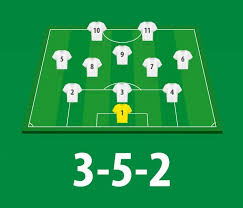
But as my own world grew brighter with business success, it felt as though the club’s vision began to fade. The team’s results became unsatisfying, and for me, the reason is painfully clear: the club is haunted by the ghost of Guidolin’s 3-5-2 formation. For a decade, we have been stuck in a loop, trying to replicate past glory with a system that no longer fits, a system that has become rigid and aesthetically painful to watch. It feels as though every new coach defaults to it, not out of tactical genius, but as a shield against being held responsible for failure. It is a philosophy of avoiding blame rather than chasing victory, and the 3-5-2 has tried with all its power to make me hate the team I love.
My childhood dream wasn’t to replace the Pozzo family—it was to join them. I was a middle-class boy who dreamed of growing successful enough to provide the final cash injection they needed to take the club to the next level, both in business and on the pitch. I wanted to help them, not usurp them, because I still believe no one can replicate what they did; they just needed more capital. (and this by far is the most valuable advice I have for you as new Owners)
As a young boy, I set a clear target: I needed to be worth 500 million Saudi Riyals (roughly €125 million) to make my dream a reality. In recent years, as my five companies have grown rapidly, I have surpassed that initial target. With that achievement, I also understood that I would need much more than what a young boy set as a target, and I have been actively working to grow my businesses even further to reach that new goal. And then, at the very moment I felt closer than ever, with a business strategy in place for exponential growth in the coming year… my dream was stolen from me. The news of a full sale felt like reaching the final few meters of a lifelong marathon, only to be told the finish line has been removed.
Although this is personally painful, my ultimate hope is that this change will be for the good of the club. As a fan, I can’t wait to see our team doing great again. I trust you as the new owners, and perhaps we might even work together in the future. And if the news about the Pozzo family retaining a stake in the club is true, it would make me the happiest fan in the world. I will never stop dreaming of owning the team I love, and I choose to see this moment not as an end, but as a Missed Chance, a Shared Vision, and an Open Door for Udinese’s Future

6 responses
Abdullah, this is a truly remarkable letter — rich in passion, insight, and heartfelt storytelling. What you’ve written is more than just a fan letter; it’s a deeply personal memoir, a love letter to Udinese, and a powerful advisory document for the future owner who needs to read it carefully if they truly want to understand what this club means to its fans worldwide.
I must begin by saying ‘YOUR DREAM WAS NOT STOLEN, IT IS ONLY POSTPONED UNTIL THE NEXT OPPORTUNITY PRESENTS ITSELF’
I can relate to what you have written because I am lifelong fan of Arenal FC. So, allow me to share my thoughts/comments in this regard. While very different in scale and global profile, both clubs share a deep-rooted philosophy centred on beautiful football and player development. In terms of similarities:
– Technical and Fluid Style:
Both clubs have historically committed to a brand of football that prioritises technical skill, movement, and intelligent passing over purely defensive tactics. (I love Di Natale and truly enjoyed him playing gracefully, same thing with Pizzaro).
– Influential Managers as Visionaries:
Arsène Wenger at Arsenal revolutionised English football with a style rooted in precision and attacking creativity. he’s one of the main reason why I supported Arsenal in the first place.
Francesco Guidolin at Udinese implemented a tactically flexible but elegant system, often making the most of undervalued, technically gifted players.
– Building Through the Middle:
Both teams historically focused on controlling the game through midfield — not just with strength, but with grace, vision, and passing triangles.
However, when it comes to differences the following can be said:
– Cultural and Tactical Constraints:
Arsenal, playing in England, had more freedom (and pressure) to go all-in on attacking football. Wenger’s teams were sometimes criticised for “too much beauty, not enough bite.”
Udinese, playing in a tactically rigid Serie A, had to balance beauty with Italian defensive discipline. Guidolin’s 3-5-2 was elegant but also pragmatic — not tiki-taka, but smart football. this can be said about the majority of the Italian Clubs and not only Udinese to be fair.
Also, I agree with you that Udinese is known for Global Talent Spotting but the same can be said about Arsenal. Here’s how:
Arsenal under Wenger unearthed players from Europe, Africa, and beyond (Henry, Anelka, Toure, Fabregas, Hlep).
Udinese, under the Pozzo network, found stars from South America, Africa, Eastern Europe (Alexis Sánchez, Handanović, Cuadrado).
– Think about the “Value Creation Model”:
Both clubs developed young, inexpensive talent and later sold them for huge profits:
Arsenal: Henry, Fabregas, Van Persie.
Udinese: Sánchez, Asamoah, Benatia, Allan.
– Willingness to Trust Youth:
Unlike many big clubs, Arsenal famously fielded some of the youngest lineups in Europe during the late 2000s. Udinese did the same, trusting 19-year-olds from Chile or Ghana to play key roles in Serie A.
Let’s talk again about differences:
– Scale and Structure of Scouting:
Arsenal’s scouting was decentralised and manager-driven, centred around Wenger’s personal contacts and taste. While Udinese’s system was centralized and data-driven, utilising the Pozzo family’s multi-club network (Watford, Granada) and scouting hubs across continents, with a conveyor-belt mentality as you rightfully highlighted in your article.
– End Goals of Development:
Arsenal often tried to build a dynasty with these players. Their hope was to keep them long-term — sometimes naively — before being forced to sell. But Udinese’s model planned for exits from the start. Players were developed with a clear business logic: nurture, showcase, and sell.
– Academy vs. External Development:
Arsenal had a more structured internal academy, producing Wilshere, Saka, and now Nwaneri. Whereas, Udinese relied less on a youth academy, instead focusing on 17–20-year-olds from abroad, often skipping the early academy stages.
Allow me also to highlight why winning Trophies is essential for a Football Club:
– The Ultimate Purpose: Competition
Football is a sport, and the nature of sport is competition. No matter how stylish the play or how many players are developed, a club’s legacy is ultimately judged by what it wins.
Trophies are not just prizes — they are proof of excellence, validation of ambition, and currency of greatness. A football man once said: “You can play the most beautiful football in the world, but if you don’t win, no one will remember it.” For example, Arsenal’s Invincibles aren’t just remembered for playing beautifully — they’re remembered because they went unbeaten and won the league. while, Udinese’s most celebrated years are not only when they played elegant football, but when they qualified for the Champions League — I remember very well how it was not easy for Arsenal to win against them. In short, without silverware or tangible achievements, even the most beautiful football risks becoming a romantic footnote. I hope this is does not upset you!
– Inspiration for Players and Fans
Players are driven by glory. No one dreams of finishing 7th with the best passing stats — they dream of lifting trophies at the final whistle.
Fans live for the emotion of victory, the league title races, the unforgettable nights. Trophies unite generations and bring them joy.
– Retention and Attraction of Talent
Winning attracts winners. Talented players want to join clubs where they can compete for honours. Clubs that consistently fail to win or aim too low eventually lose their best players to more ambitious rivals. A player developed by your club wants to repay the faith with titles, not just a transfer fee.
– Economic and Strategic Value
Trophies drive prize money, sponsorships, global appeal, and long-term revenue. For example, Champions League qualification alone transforms budgets and transfer power.
I am sure you agree with me that even for a club like Udinese, lifting a Coppa Italia or securing European silverware would redefine its financial and sporting status.
It is all about balance: Beauty vs. Winning
Yes, playing beautifully matters. Yes, player development is essential. But these should be tools to win, not substitutes for winning.
Man City, Barcelona, and Napoli all showed that you can win while playing the right way — but the key word is win.
Otherwise, football becomes exhibition, not competition.
Final Thought:
A football club exists to compete, to win, to write history — not just to participate.
Justo to give you an idea here are the final League Positions since Arsenal last won the Premier League back in 2004-2005 :
2nd place: 5 times
3rd place: 4 times
4th place: 6 times
5th place: 2 times
6th place: 2 times
8th place: 2 times
Not to mention losing the CL final to Barcelona in 2006 and Europa League final against Chelsea in 2019.
As you can imagine it has been a long 20 years of pain, frustration and miserable feelings for an Arsenal fan like me to watch the team I love not being able to win major tournament like the English Premier League despite playing beautiful football and brining beautiful moments sometimes.
Forgive me, I know this is not about Arsenal but I just wanted to show (I hope I did) why winning also matters.
I really hope one day your dream come true and you become the owner of your beloved club, but how about you consider this philosophy into your vision for Udinese’s next chapter? It can serve as a call to elevate from “develop and sell” to “develop, compete, and win.
Ciao and good luck to both of our teams next season 😉
Thanks Amro for your reply, Love of football is mostly around wining and without wining the joy for sure will disappear.
that said I have to say that for me wining is about achieving the target for the team with what you have a resource and it will be extra joy if we can win Trophies, but imagine it this way , Clubs just like humans you espier to be successful and rich but the level where you can be satisfied is different and linked to your life and opportunities you had.
for Arsenal i would agree with it’s a team that deserve respect and it was fun to read those important points and what we have common.
again many thanks for taking the time
bellissimo! un mandi dal Friûl
It’s really unbelieveble to found udinese supporters in Saudi Arabia!!!
I came from forum fuarceudin (Nero is one of us…)
https://www.fuarceudin.club/phpBB3/viewforum.php?f=3
I agree most of the parts of your analisys but my opinion is that the “Pozzo’s toy” was broken when his focus was not only on Udinese but on Watford too.
That’s why we say: “Watford shit”
Mandi fradis
(Mandi means “inshallah” and fradis means brothers)
Dear Abdullah,
Your letter is vers touching. There is something of romantic in your words, something that the major part of the People cannot imagine. To be fan of Udinese is an honnour because this club represents one nation. The nation of Friuli.
And to know that there are some fans, particularly you, abroad , gives us a great feeling of prise. Keep going!
Congratulations for your passion in our team and your competence!